
Blog
How Steroids Affect Hormones: The Endocrine System Explained
Jul
How Steroids Affect Hormones: The Endocrine System Explained
Hormones are the body’s chemical messengers. They influence nearly every biological process, from metabolism and muscle growth to mood, reproduction, sleep, and energy production. Even slight changes in hormone levels can create noticeable effects throughout the body because hormones communicate with almost every organ system.
When discussing steroids and hormones, many people assume that steroids simply increase testosterone. In reality, the relationship is far more complex. Steroids interact with an intricate network of glands and signaling pathways collectively known as the endocrine system. Understanding these interactions provides valuable insight into how hormones regulate normal physiology and why medical professionals carefully monitor hormone therapy.
Whether prescribed for legitimate medical conditions or studied in research settings, steroids influence hormonal communication through multiple biological mechanisms. This article explains how the endocrine system functions, how steroid hormones operate, and how anabolic steroids affect hormonal balance from a scientific perspective.
Understanding the Endocrine System
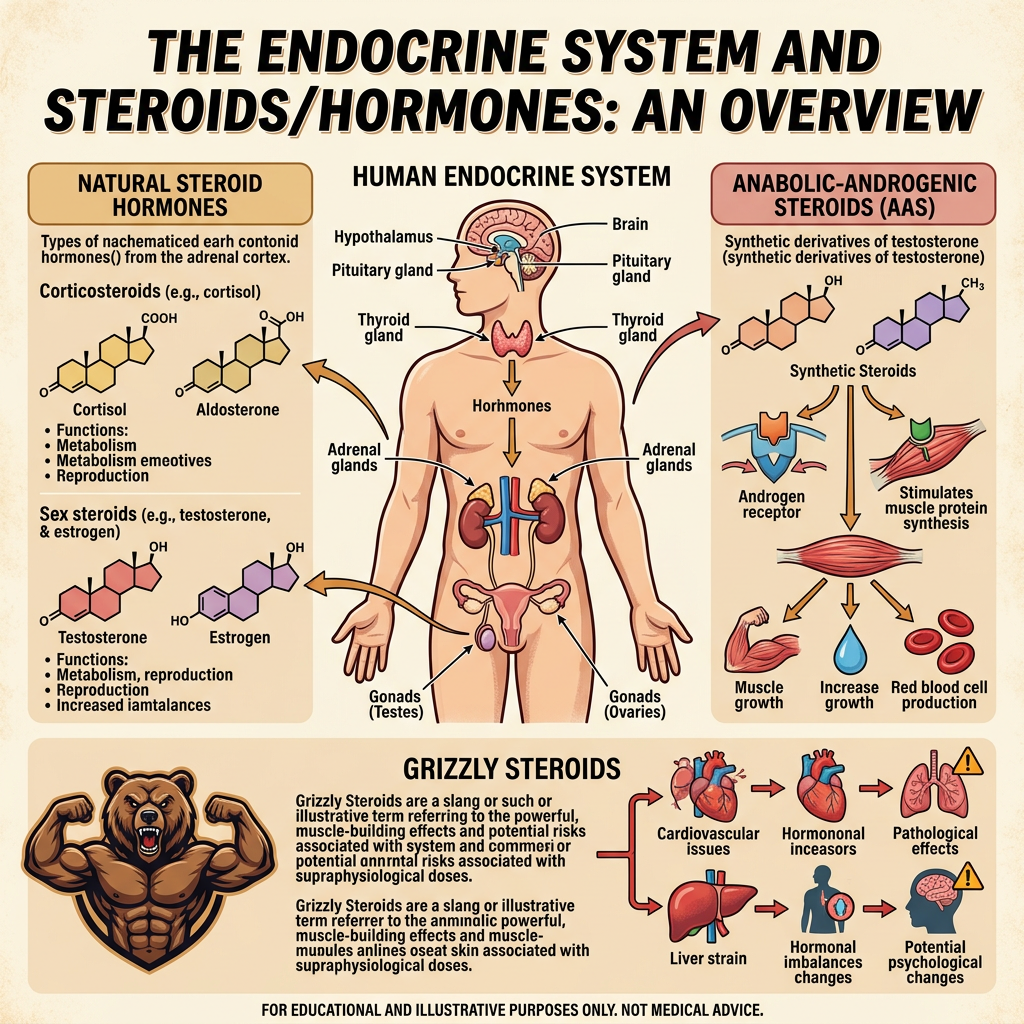
The endocrine system consists of specialized glands that release hormones directly into the bloodstream. Unlike nerves, which transmit signals within milliseconds, hormones produce longer-lasting effects that regulate countless bodily functions.
Major endocrine glands include:
- Hypothalamus
- Pituitary gland
- Thyroid gland
- Adrenal glands
- Pancreas
- Testes
- Ovaries
Each gland communicates with others through feedback mechanisms. Rather than operating independently, they function as one coordinated network.
For example, when testosterone levels decline naturally, the brain detects this reduction and signals the testes to produce more testosterone. Once adequate hormone levels are restored, hormone production slows automatically.
This process, called negative feedback, helps maintain hormonal stability throughout life.
What Are Steroid Hormones?
Not every steroid is the same.
Steroid hormones are naturally produced from cholesterol. They play vital roles in numerous physiological functions.
Examples include:
- Testosterone
- Estrogen
- Progesterone
- Cortisol
- Aldosterone
These hormones regulate:
- Muscle protein synthesis
- Immune responses
- Blood pressure
- Reproductive health
- Bone density
- Fat metabolism
- Electrolyte balance
- Stress adaptation
Because steroid hormones dissolve easily through cell membranes, they enter cells directly and bind to intracellular receptors. This allows them to influence gene expression, ultimately changing how cells manufacture proteins.
Unlike many hormones that act within seconds, steroid hormones often produce changes over hours or days by altering cellular function at the genetic level.
Medical Steroids Versus Anabolic Steroids
One of the biggest misconceptions surrounding steroids and hormones involves confusing anabolic steroids with corticosteroids.
Although both belong to the steroid family, they serve entirely different purposes.
Corticosteroids
Medical corticosteroids mimic cortisol, a hormone produced by the adrenal glands.
Physicians prescribe corticosteroids to reduce inflammation associated with:
- Asthma
- Autoimmune diseases
- Severe allergies
- Arthritis
- Inflammatory bowel disease
- Organ transplantation
These medications primarily influence immune and inflammatory pathways rather than muscle growth.
Anabolic-Androgenic Steroids
Anabolic-androgenic steroids (AAS) are synthetic compounds structurally similar to testosterone.
Researchers originally developed many of these compounds for legitimate medical conditions involving muscle wasting, delayed puberty, severe burns, osteoporosis, and certain hormone deficiencies.
Their anabolic properties promote protein synthesis and tissue building, while androgenic properties influence male sexual characteristics.
Because these compounds resemble testosterone, they also interact with the body’s hormone-regulating systems.
The Hypothalamic-Pituitary-Gonadal (HPG) Axis
To understand how anabolic steroids influence hormones, it is essential to understand the HPG axis.
The HPG axis is the body’s central reproductive hormone control system.
It consists of three major components:
Step 1: Hypothalamus
The hypothalamus releases Gonadotropin-Releasing Hormone (GnRH).
GnRH acts as the starting signal for testosterone production.
Step 2: Pituitary Gland
GnRH stimulates the pituitary gland.
The pituitary releases:
- Luteinizing Hormone (LH)
- Follicle-Stimulating Hormone (FSH)
These hormones travel through the bloodstream.
Step 3: Testes
LH stimulates specialized Leydig cells inside the testes to produce testosterone.
FSH supports sperm production.
The newly produced testosterone circulates throughout the body, influencing muscle tissue, bone health, red blood cell production, mood, libido, and reproductive function.
Once testosterone reaches sufficient concentrations, the brain detects the increase and reduces GnRH production.
This negative feedback loop prevents excessive hormone production.
How Anabolic Steroids Influence Hormonal Feedback
Because anabolic steroids resemble testosterone, the brain often interprets them as naturally produced testosterone.
As circulating androgen levels rise, the hypothalamus responds by decreasing GnRH release.
Lower GnRH reduces LH and FSH secretion from the pituitary gland.
With reduced LH stimulation, the testes produce less endogenous testosterone.
This illustrates a fundamental principle of endocrine physiology: when the body detects adequate or elevated androgen activity, it naturally decreases its own hormone production through negative feedback.
The degree of suppression depends on several variables, including the specific compound, dosage, duration of exposure, individual biology, age, and overall endocrine health. Recovery can also vary considerably between individuals, which is one reason healthcare professionals monitor hormone levels when medically necessary.
Testosterone Production and Endocrine Balance
Testosterone supports far more than muscle development. It contributes to:
- Bone mineral density
- Red blood cell production
- Sexual function
- Mood and cognitive performance
- Body composition
- Energy metabolism
Because testosterone is part of a broader endocrine network, changes in its regulation can influence other hormones and physiological systems. For example, shifts in testosterone levels may affect estrogen production through aromatization, alter signaling within the reproductive axis, and influence metabolic processes.
Rather than acting in isolation, testosterone functions as one component of an interconnected hormonal environment. Appreciating this complexity helps explain why endocrine regulation is carefully balanced and why medical evaluation is important whenever hormone disorders are suspected.
Estrogen: An Essential Hormone in Men and Women
Although estrogen is commonly associated with female physiology, it is also an important hormone in men. Healthy estrogen levels support bone mineral density, cardiovascular function, libido, brain health, and aspects of reproductive function.
One way the body produces estrogen is through aromatization, a process in which the enzyme aromatase converts a portion of testosterone into estradiol, the primary form of estrogen.
The balance between testosterone and estrogen is dynamic. When androgen levels change, estrogen levels may change as well because both hormones are connected through this enzymatic pathway.
Not every anabolic steroid is converted into estrogen. Some compounds aromatize readily, while others have little or no aromatization potential. This difference helps explain why hormonal responses vary depending on the specific compound involved.
Healthcare professionals evaluate hormone levels as a whole rather than focusing on testosterone alone. Maintaining an appropriate balance between multiple hormones is often more important than maximizing a single hormone.
Cortisol and the Adrenal Glands
Another important aspect of steroids and hormones involves cortisol.
Cortisol is produced by the adrenal glands and is often called the body’s “stress hormone.” While it is best known for its role during stressful situations, cortisol also regulates many everyday functions, including:
- Blood glucose regulation
- Blood pressure
- Inflammatory responses
- Immune function
- Circadian rhythm
- Energy availability
Contrary to popular belief, cortisol is not inherently harmful. It is essential for survival. Problems generally arise when cortisol remains chronically elevated or chronically suppressed.
Anabolic-androgenic steroids do not replace cortisol, but shifts in hormonal signaling, training load, nutrition, sleep, and overall endocrine status can influence how the body responds to physiological stress.
Corticosteroids, by contrast, directly mimic cortisol and are prescribed to manage inflammatory and autoimmune conditions. This distinction highlights why it is important not to confuse corticosteroids with anabolic steroids—they interact with different hormone pathways and are used for different medical purposes.
Insulin: The Metabolic Hormone
The endocrine system also relies on insulin, a hormone produced by the pancreas.
Insulin regulates how cells absorb and use glucose from the bloodstream. It also plays a role in:
- Glycogen storage
- Protein synthesis
- Fat storage
- Cellular energy production
Insulin does not work independently. It interacts with other hormones, including cortisol, growth hormone, thyroid hormones, and sex hormones.
Researchers continue to study how changes in androgen levels may influence insulin sensitivity and body composition. Factors such as diet, physical activity, body weight, genetics, and overall health also contribute significantly, making it difficult to attribute metabolic changes to a single hormone.
The key takeaway is that endocrine health depends on the coordinated action of many hormones rather than one “master hormone.”
Thyroid Hormones and Metabolism
The thyroid gland produces hormones that regulate metabolic activity throughout the body.
These include:
- Thyroxine (T4)
- Triiodothyronine (T3)
Thyroid hormones influence:
- Resting metabolic rate
- Heart function
- Brain development
- Digestion
- Body temperature
- Energy expenditure
Although thyroid hormones operate through a separate regulatory system, they interact with the broader endocrine network. Changes in overall hormonal status, illness, nutrition, or medications can affect thyroid function, underscoring the interconnected nature of endocrine physiology.
When evaluating hormonal health, clinicians often consider thyroid hormones alongside testosterone and other endocrine markers rather than in isolation.
Growth Hormone and IGF-1
Growth hormone (GH) is produced by the pituitary gland and works closely with Insulin-like Growth Factor-1 (IGF-1), which is primarily produced in the liver.
Together, GH and IGF-1 contribute to:
- Tissue growth
- Bone development
- Recovery
- Protein synthesis
- Metabolic regulation
Growth hormone release naturally increases during deep sleep and after exercise. Nutrition, age, and genetics also influence its secretion.
Although GH and testosterone have different functions, they interact within the broader endocrine environment. Research continues to examine how these hormonal systems influence one another during development, aging, and various medical conditions.
Fertility and Reproductive Hormones
The endocrine system plays a central role in reproductive health.
As discussed earlier, the HPG axis regulates testosterone production through the coordinated actions of:
- GnRH
- LH
- FSH
FSH is especially important because it supports sperm production within the testes.
When hormonal signaling within this axis is altered, sperm production may also be affected. The extent of these changes varies between individuals and depends on factors such as age, baseline hormone levels, overall health, and the duration and nature of hormonal disruption.
Because fertility involves multiple hormones and organs working together, healthcare professionals may evaluate hormone levels, reproductive history, and other clinical findings when assessing reproductive health.
Why Hormones Function as a Network
One of the most common misconceptions is that hormones work independently.
In reality, the endocrine system functions more like an orchestra than a collection of solo performers.
For example:
- Testosterone influences muscle, bone, and reproductive tissues.
- Estrogen supports bone health and cardiovascular function.
- Cortisol helps regulate stress and energy.
- Insulin controls nutrient use.
- Thyroid hormones regulate metabolism.
- Growth hormone supports tissue development.
Each hormone affects the activity of others through feedback loops, receptor interactions, and shared signaling pathways.
This interconnectedness explains why endocrinologists often assess multiple hormone levels together rather than relying on a single laboratory value.
The Importance of Hormonal Homeostasis
The body continually works to maintain homeostasis, a stable internal environment.
Negative feedback mechanisms are central to this process.
When hormone concentrations rise above or fall below the body’s target range, the endocrine system adjusts hormone production to restore balance.
Examples include:
- Testosterone regulates LH and FSH release.
- Cortisol regulates ACTH secretion.
- Thyroid hormones regulate TSH production.
- Blood glucose influences insulin release.
These automatic adjustments occur throughout the day and are essential for maintaining normal physiological function.
Individual Responses Can Differ
No two endocrine systems are exactly alike.
Several factors influence hormonal responses, including:
- Genetics
- Age
- Sex
- Body composition
- Sleep quality
- Nutrition
- Physical activity
- Existing medical conditions
- Medications
- Overall health
For this reason, healthcare providers avoid making conclusions based solely on symptoms or assumptions. Laboratory testing, medical history, and physical examination are often needed to accurately assess endocrine function.
Key Takeaways
Understanding steroids and hormones begins with understanding the endocrine system itself.
Rather than acting independently, hormones operate within an interconnected communication network that helps regulate growth, metabolism, reproduction, immune function, stress responses, and countless other physiological processes.
Anabolic-androgenic steroids resemble testosterone and therefore interact with the body’s natural hormonal feedback systems. Corticosteroids, on the other hand, mimic cortisol and are primarily used to treat inflammatory and autoimmune conditions. Although both belong to the steroid family, they have distinct medical purposes and biological effects.
The endocrine system relies on carefully regulated feedback mechanisms involving the hypothalamus, pituitary gland, adrenal glands, thyroid, pancreas, and reproductive organs. Maintaining this balance—known as homeostasis—is essential for overall health.
As endocrinology research continues to advance, scientists are gaining a deeper understanding of how hormones influence nearly every aspect of human physiology. This knowledge not only improves the treatment of hormone-related disorders but also highlights the importance of individualized medical care when evaluating endocrine health.
Frequently Asked Questions
1. What are steroid hormones?
Steroid hormones are hormones derived from cholesterol that regulate reproduction, metabolism, immune responses, stress adaptation, and many other biological processes.
2. What is the endocrine system?
The endocrine system is a network of glands that produce hormones to regulate growth, metabolism, reproduction, and overall body function.
3. How are anabolic steroids different from corticosteroids?
Anabolic steroids primarily interact with androgen receptors and testosterone-related pathways, while corticosteroids mimic cortisol and are used mainly to reduce inflammation.
4. What is the HPG axis?
The hypothalamic-pituitary-gonadal axis is the hormonal communication system that regulates testosterone production and reproductive function.
5. Why is testosterone important?
Testosterone contributes to muscle maintenance, bone health, red blood cell production, mood, libido, and reproductive physiology.
6. Does estrogen play a role in men?
Yes. Men naturally produce estrogen, which supports bone density, cardiovascular health, and other physiological functions.
7. What does cortisol do?
Cortisol helps regulate stress responses, metabolism, blood pressure, immune function, and daily energy balance.
8. How does insulin interact with other hormones?
Insulin works alongside hormones such as cortisol, thyroid hormones, and sex hormones to regulate metabolism and nutrient use.
9. Why is hormonal balance important?
Balanced hormone levels help maintain healthy growth, metabolism, reproduction, and overall physiological stability.
10. When should someone consult a healthcare professional about hormones?
Anyone experiencing persistent symptoms suggestive of a hormonal disorder should seek evaluation from a qualified healthcare professional, who may recommend appropriate clinical assessment and laboratory testing.


Buy Grizzly Steroids online: https://grizzlysteroids.shop/